History rarely announces the beginning of a new era; it reveals it afterward.
Great conflicts rarely begin with a single event. They emerge gradually, through a series of crises that at first appear regional, disconnected and manageable.
Nazi Germany and the Soviet Union had invaded and partitioned Poland, France had fallen, Britain was fighting for its survival, and Japan had been at war in China since 1937 when the Japanese attacked Pearl Harbor in December 1941.
For Americans, the global war began at Pearl Harbor. For the world, it had begun years earlier.
Could we be living through the early stages of a global conflict that we will recognize only in retrospect?
When historians look back at the beginning of this global conflict, will they point to Russia’s invasion of Georgia in 2008, its seizure and attempted annexation of Crimea in 2014 or its full-scale invasion of Ukraine in 2022? Will they point to Hamas’ October 2023 attack on Israel and the war that followed? Will they look to China’s rapid military buildup and its effort to militarize the South China Sea and reshape the balance of power in the Indo-Pacific?
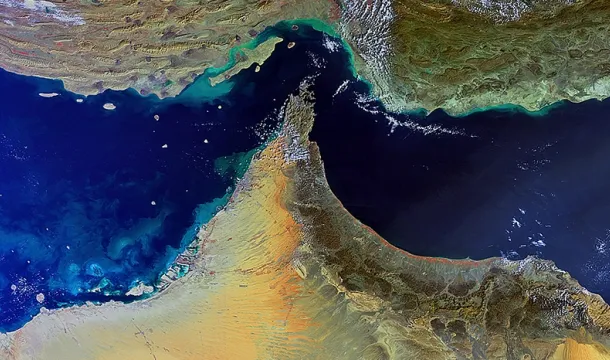
Europe is now in the fifth year of a devastating war, with more than 1 million military casualties. The conflict is reaching beyond Ukraine, with Russia using cyberattacks, sabotage and other gray-zone tactics against NATO members. In the Middle East, the war involving Iran, Israel and the United States is in its ninth month, with fighting and attacks extending from the Persian Gulf to the Red Sea. In Asia, China is steadily increasing the military and economic pressure it can bring against Taiwan and across the wider Indo-Pacific.
We continue to treat these as separate conflicts. We may be failing to recognize they are converging into something larger.
As the world becomes more fractured, these conflicts are becoming more global.
Challenges to American power increasingly connect these conflicts. As Hal Brands has observed, adversaries do not have to fight shoulder to shoulder for their separate actions to have a combined strategic effect. Weapons, technology, intelligence and economic support are moving from region to region, adversary to adversary and conflict to conflict.
Russia has provided Iran with targeting intelligence on U.S. forces, while Chinese companies have supplied satellite imagery that has been used to target American military facilities. Russia has also helped Iran develop advanced supersonic cruise missiles capable of threatening U.S. naval forces. Iran, meanwhile, has supplied Russia with drones used in its war against Ukraine.
A war in Europe consumes Western weapons, resources and attention. A widening conflict in the Middle East diverts American military resources and strategic focus. Pressure on Taiwan tests whether the United States can deter China while managing commitments elsewhere. The danger is not simply that the United States faces several conflicts at once, but that pressure in one theater weakens its position in another.
China presents the most consequential long-term challenge to the United States. Beijing is not simply supporting Russia and Iran; it is pursuing its own effort to reshape the balance of power in the Indo-Pacific and beyond. Xi Jinping has made the “great rejuvenation of the Chinese nation” a central objective, with Taiwan at the heart of that ambition. Beijing is increasing military pressure on Taiwan, challenging the Philippines and expanding its ability to control disputed waters and the approaches to the western Pacific. Its objective is not simply greater influence in Asia, but a regional order in which the United States has less ability to shape events — and a global balance of power more favorable to China.
This fall’s Trump-Xi summit showed that, despite the fanfare, the competition between the United States and China is structural. The summit may temporarily ease tensions, but it does not resolve the fundamental contest for power.
Historians may look back at these wars and see separate conflicts. Or they may see the beginning of a larger global struggle that we failed to recognize at the time. We will not know until it is history. But statesmen do not have the luxury of historians, who can look back and see how events unfolded. They must recognize the changing character of the world while it is still upon us — and act while there is still time to shape what comes next.
History will decide when this global conflict began. We will be judged by whether we recognized the challenge in time to confront it.
David A. Merkel is visiting distinguished fellow for diplomacy and global leadership at the College of Charleston, and an associate with LSE IDEAS. He previously served as deputy assistant secretary of state and director on the National Security Council.
This article appeared originally on: https://www.postandcourier.com/opinion/commentary/us-global-conflicts-separate-linked/article_df147007-bf91-4841-952e-3274b8b19705.html

Commentary: Recognizing the next great global conflict before history does

Kazakhstan and the End of the Multi-Vector Moment